Executive Summary
Fixing loose artisan keycap stems is one of the most common challenges facing mechanical keyboard enthusiasts who invest in handcrafted or small-batch resin caps. Because artisan keycaps are rarely manufactured to the same tolerances as mass-produced counterparts, their internal stem dimensions frequently diverge from the MX-style cross-stem standard. This guide covers two primary repair approaches — the Tape Method (non-destructive, reversible) and the Glue/Resin Method (semi-permanent, precision-based) — along with engineering precautions, tool recommendations, and a direct comparison table to help you choose the right fix for your situation.
- Tape Method: A reversible, non-destructive fix using PTFE or plastic wrap to create friction.
- Glue/Resin Method: A semi-permanent solution for stems that are significantly oversized relative to the switch cross-stem.
- Precision Tools: Always use toothpicks or fine-tipped applicators to prevent adhesive overflow into the switch housing.
- UV Resin Advantage: Cures in seconds, can be sanded down if over-applied, making it the preferred choice for enthusiasts.
Why Artisan Keycaps Develop Loose Stems
Artisan keycaps develop loose stems primarily because they are handmade or cast in small batches, introducing natural variations in stem tolerances that mass-produced keycaps do not exhibit. A loose fit occurs when the internal bore of the keycap stem is slightly larger than the MX-style switch cross-stem it is designed to grip.
Unlike factory-molded keycaps produced in runs of thousands with tightly controlled injection tooling, artisan keycaps are typically crafted by independent makers using polyurethane resin, UV resin, or polymer clay poured into hand-cut molds. This process, while visually stunning, introduces inherent dimensional variability. Even a deviation of 0.1–0.2 mm in the internal stem diameter can result in a cap that wobbles, pops off during typing, or fails to seat flush with adjacent keys.
The root mechanical cause is straightforward: a MX-style cross-stem has a standardized cross-shaped protrusion measuring approximately 4.0 mm across its widest point. When the keycap’s internal cruciform receptacle is cast even slightly oversized, the normal friction-based retention that standard keycaps rely on simply does not develop. This is compounded by the fact that resin can contract or expand slightly depending on cure temperature, ambient humidity, and the specific resin formulation used.
Understanding this root cause is what drives the two primary repair strategies. Rather than discarding a valuable artisan cap or forcing it to stay in place with brute pressure — which risks cracking the stem entirely — a targeted, incremental approach always yields the best results. For broader context on mechanical keyboard hardware engineering and component tolerance standards, exploring hardware engineering strategy resources offers a strong foundational framework for this kind of precision diagnostics work.
The Tape Method: A Non-Destructive, Reversible Fix
The Tape Method is the first-line, non-destructive repair for loose artisan keycap stems, using a small piece of PTFE plumber’s tape or plastic wrap wrapped around the switch cross-stem to create friction and eliminate wobble without altering the keycap itself.
This approach is the most widely recommended starting point for any loose keycap repair precisely because it is completely reversible. The artisan cap remains entirely unmodified, preserving its resale value and structural integrity. The procedure is also fast — most repairs take under two minutes with no special equipment.
The most accessible material for this method is standard Saran wrap (thin plastic cling film) or, preferably, PTFE plumber’s tape (also sold as thread seal tape). PTFE tape is particularly well-suited for this application because of its low surface energy, which paradoxically creates consistent friction against the resin stem walls without bonding to them. It is also heat-resistant and will not degrade from the minor heat generated during extended typing sessions.
Step-by-Step: Tape Method Procedure
- Remove the target keycap switch from the keyboard (or simply access the switch stem directly if it is already empty).
- Tear a very small strip of PTFE tape — approximately 5–8 mm in length and the same width as the tape roll (typically 12–18 mm).
- Wrap the strip once around the base of the cross-stem, ensuring the tape covers all four arms of the cross evenly.
- Press the artisan keycap down firmly onto the taped stem. You should feel a noticeably snugger engagement.
- If the cap still feels loose, remove it, fold the tape to double its thickness, and repeat.
- Test the cap by pressing it several times to confirm it actuates cleanly and does not pop off.
The key engineering insight here is incremental layering. Adding too much tape at once can create excessive resistance, potentially preventing the cap from seating fully or causing the resin stem to crack under the force required to press it down. As verified in diagnostic practice, over-tightening a stem — whether by tape, glue, or any other means — can cause the surrounding plastic or resin to stress-whiten or fracture along the molded seam lines. Always test the fit after each layer before adding more material.
The Glue and Resin Method: Semi-Permanent Stability
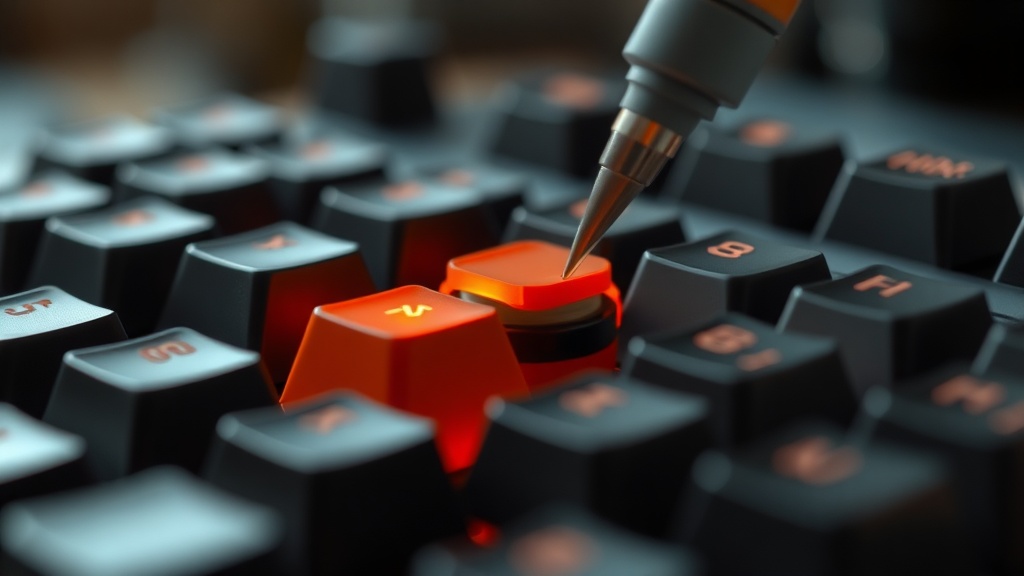
The Glue and Resin Method involves applying a microscopic layer of UV resin or cyanoacrylate adhesive to the inner walls of the keycap stem, physically narrowing the bore to create a friction-fit with the switch cross-stem — offering a semi-permanent solution for severely oversized stems where tape alone is insufficient.
When the tape method fails to produce an adequately snug fit — typically when the stem bore is more than 0.3–0.5 mm oversize — it is time to consider a material-fill approach. The goal is not to permanently bond the keycap to the switch, but to deposit a thin, controlled layer of material on the interior stem walls, effectively reducing the internal diameter just enough to restore normal MX retention friction.
Choosing the Right Adhesive: UV Resin vs. Superglue
UV resin is strongly preferred over standard cyanoacrylate (superglue) for this application for several critical reasons. UV resin remains workable liquid until deliberately cured under a UV lamp, giving you full control over application and positioning. Once cured — typically within 30–60 seconds of UV exposure — it forms a hard, slightly flexible shim that bonds to the resin walls of the stem. Critically, if too much material is applied and the fit becomes too tight, UV resin can be gently abraded away using fine-grit sandpaper (800–1200 grit) or a small needle file without damaging the surrounding cap material.
Superglue, by contrast, cures instantly on contact with moisture, leaving almost no margin for error. It also has a higher risk of wicking deeper into the stem channel through capillary action, potentially bonding the cap to the switch itself — a scenario that is extremely difficult to reverse without destroying the cap or the switch. If superglue is the only option available, use a gel-formula cyanoacrylate, which has significantly lower wicking tendency.
“Precision in adhesive application is not optional — it is the entire method. A toothpick tip carries approximately the right volume of material for a single stem wall. Any more, and you risk overflow into the switch housing.”
— Hardware Diagnostics Engineering Practice Note
Step-by-Step: UV Resin Method Procedure
- Before beginning, wipe the interior of the keycap stem with a cotton swab dampened in isopropyl alcohol (90% or higher). This removes mold release agents, skin oils, and dust that would prevent adhesion.
- Allow the stem to air-dry for at least 60 seconds before proceeding.
- Dip the tip of a wooden toothpick or fine needle into a small drop of UV resin placed on a non-stick surface (e.g., a silicone mat or wax paper).
- Insert the toothpick into the keycap stem and apply a thin smear of resin to one inner wall at a time. Do not attempt to coat all four walls simultaneously in a single pass.
- Immediately expose the stem opening to a UV lamp for 30–60 seconds to cure the deposited layer.
- Test the fit on a sacrificial switch (not your primary board) before committing to a final seating. The cap should require moderate, even pressure to press down and should not wobble once seated.
- If the fit is still loose, repeat the process on an adjacent wall. If the fit is too tight, carefully sand the cured resin with folded 1000-grit sandpaper until the desired friction is achieved.
According to well-established findings in the mechanical keyboard community’s engineering documentation on Wikipedia, the retention force of a standard MX-compatible keycap stem relies entirely on an interference fit between two plastic components — there is no locking mechanism. This means even small changes in the internal bore diameter have a proportionally large effect on perceived stability, which is precisely why these micro-application methods are effective.
Comparison: Tape Method vs. Glue/Resin Method
Choosing between the Tape Method and the Glue/Resin Method depends on the severity of the loose fit, your risk tolerance for permanent modification, and the tools available — with the Tape Method always recommended as the first attempt before escalating to adhesives.
| Criteria | Tape Method (PTFE / Saran Wrap) | UV Resin Method | Superglue (CA) Method |
|---|---|---|---|
| Reversibility | ✅ Fully reversible | ⚠️ Sandable, but semi-permanent | ❌ Difficult to reverse; wicking risk |
| Modifies the Keycap | No | Yes (interior only) | Yes (interior; bonding risk) |
| Skill Required | Low | Medium | High (very low margin for error) |
| Tools Needed | PTFE tape / plastic wrap only | UV resin, UV lamp, toothpick, IPA | Gel CA glue, toothpick, IPA |
| Time to Complete | ~2 minutes | ~15–20 minutes (including cure) | ~10 minutes (but cure time varies) |
| Risk of Damage | Very Low (if layered incrementally) | Low (sandable if over-applied) | High (wicking, permanent bonding) |
| Best For | Mild to moderate looseness | Severe oversizing; rare caps | Last resort only |
Engineering Precautions and Best Practices
The cardinal rules for repairing loose artisan keycap stems are: always clean with isopropyl alcohol before applying any material, apply adhesives in micro-doses using a toothpick or fine needle, and test incrementally on a sacrificial switch before mounting on your primary board.
From a hardware diagnostics perspective, the most common failure mode in DIY keycap stem repairs is not under-application of material — it is over-application. Enthusiasts who are frustrated with a persistently loose cap tend to apply too much tape or too much resin in a single attempt, creating the opposite problem: a stem bore that is now too tight. As noted in the fact data underlying this guide, using too much filler material can cause the surrounding resin or plastic to stress-whiten — a visible whitening of the material surface caused by microcracks forming under excessive radial stress. In worst-case scenarios, this leads to a complete stem fracture, permanently destroying the artisan cap.
The isopropyl alcohol cleaning step deserves special emphasis. Most artisan keycap molds are treated with a mold release compound — typically a silicone-based or wax-based agent — that allows the cured resin to separate from the mold cleanly during production. Trace amounts of this release agent inevitably remain on the inner stem walls. If adhesive is applied over these residues, the bond will be weak and unreliable regardless of the adhesive type used. A 30-second wipe with a IPA-dampened cotton swab eliminates this problem entirely.
Finally, always perform your test fit on a spare or sacrificial switch rather than a switch already installed in your keyboard. In the event of a bonding failure where the cap adheres permanently to the switch stem, you will lose only a single inexpensive switch rather than risking damage to your PCB or hotswap socket from the force required to extract it.
Frequently Asked Questions
Can I use the tape method on every type of artisan keycap, including those with unusual stem profiles?
The tape method works on any keycap that uses a standard MX-compatible cruciform stem receptacle, regardless of the cap’s outer shape, material, or artistic design. The tape is applied to the switch cross-stem, not the keycap itself, so the external profile of the artisan cap is completely irrelevant. The only limitation is physical access — if the keycap’s internal bore is so short that a single layer of tape prevents the cap from seating fully against the switch top housing, you may need to trim the tape to a smaller width before wrapping.
Will UV resin bond to the switch stem and destroy my switch if I apply too much?
This is the most critical risk of the resin method and the reason why a sacrificial test switch is non-negotiable. UV resin will not spontaneously bond to the switch’s POM (polyoxymethylene) plastic cross-stem under normal conditions — its adhesion to POM is relatively poor, which is why it works as a shim rather than a permanent adhesive in this context. However, if an excessive amount of resin flows down into the switch housing and contacts the internal leaf spring or actuator, it can cause switch failure or jam the mechanism. Applying resin exclusively to the interior walls of the keycap stem — never to the switch itself — is the safest protocol.
My artisan keycap fits tightly at first but becomes loose after a few weeks of use. What is happening?
This is a well-documented phenomenon caused by creep compression of soft PTFE tape or the gradual micro-compression of a thin resin shim under repeated keystroke impacts. PTFE tape, while excellent for initial friction fitting, is a relatively soft material and will compress over time with use. If you notice the cap becoming loose again after a few weeks, the solution is to remove the tape layer and replace it with a fresh, slightly thicker layer — or to upgrade to the UV resin method for a more dimensionally stable long-term fix. UV resin, being a thermoset material, does not creep under normal keystroke loads and should maintain its dimensions indefinitely once cured.